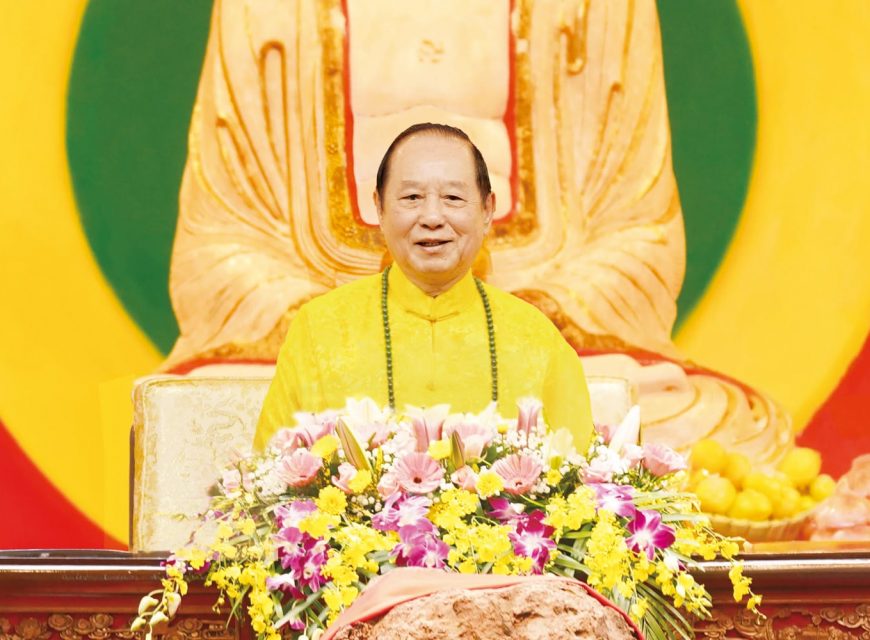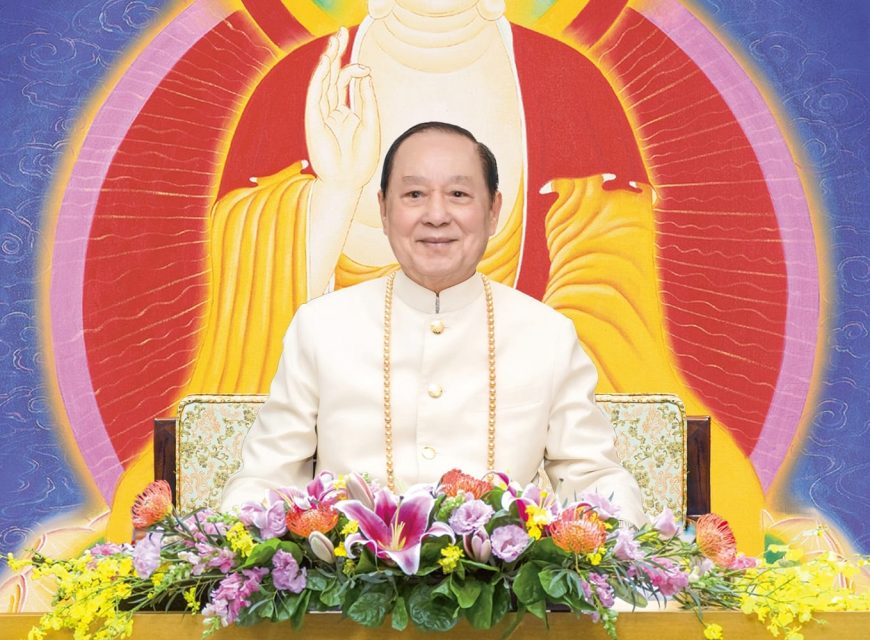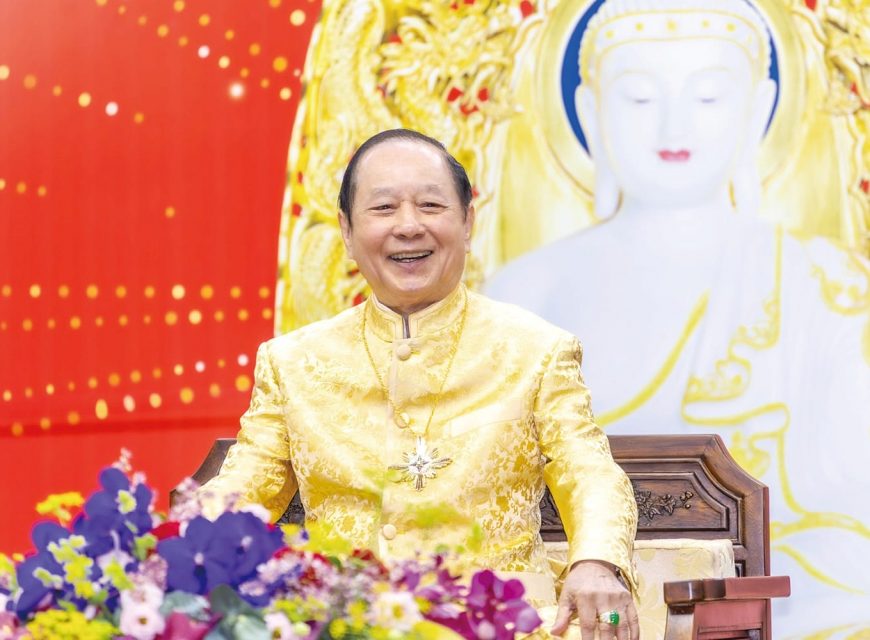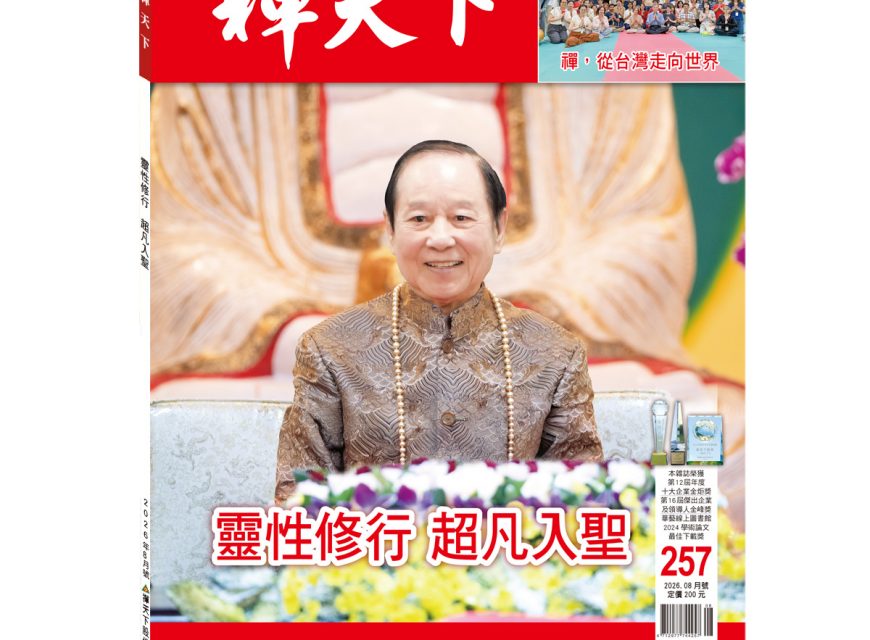


Impartation: Grandmaster Wu Chueh Miao-Tien, the 85th-Generation Grandmaster of Buddhist Zen School
The word Zen is a transliteration from an Indian term, which the Indians call “Dhyana.” In fact, we have known “Zen” for thousands of years (in China); it simply lacked a formal name. Many practitioners, such as the Immortals, Daoists, or those who practiced internal energy (Qigong), all utilized this same method. It was only after the 28th Grandmaster of Indian Zen—who is also the Founding Grandmaster of Chinese Zen, “Grandmaster Bodhidharma”—arrived at the Shaolin Temple on Mount Song in Henan, that “Zen” was formally propagated and brought to its full glory.
In a narrow sense, Zen is quiet contemplation, which encompasses two meanings: Stillness and Contemplation.
Stillness means to cease; it is the cessation of all delusive thoughts. Delusive thoughts refer to unnecessary or stray ideas. In our busy daily lives, our brains are constantly active, yet almost all of these thoughts are redundant delusions. We must bring these meaningless thoughts to a halt. Therefore, Stillness is the process of emptying out all these unnecessary delusions entirely.
Contemplation refers to consideration and deliberation; in the Zen tradition, this is known as Investigative Inquiry. What do we investigate? We investigate the transition from “phenomena” to “truth”, from physical objects to the ultimate reality; ensuring that all matters align with the Truth. For instance, moving from knowledge to wisdom, or from the mundane to the sacred—this is the essence of “Investigative Inquiry”; this is the essence of “Contemplation”.
Zen Cultivation Expands the Value of Life
In a broader sense, Zen encompasses all phenomena in the universe. Everything—from a single blade of grass or a tree, to the rustling of leaves, the shifting of clouds and air currents, lightning, thunder, wind, and rain; as well as the Earth, other planets, and the entire realm of the Void—is inseparable from Zen and an integral part of it. The same is true for our very thoughts and every detail of our daily lives.
A person with Zen cultivation will find that life holds much greater value. For instance, most people see a glass of water as merely a glass of water. However, someone with the cultivation of Zen can envision how this same glass of water could save a life in the desert or soothe a patient suffering from a high fever. This is the spirit of Zen; this is the application of Zen.
Therefore, once we have gained an understanding of Zen and its profound inner meaning, we will know how to apply it. In its application, we learn the principle of suitability. For instance, as previously mentioned, a glass of water can save a human life, but it cannot be used to raise fish. To raise fish, one requires a pond or a vast lake.
Furthermore, within that same lake, one can raise various aquatic species simultaneously; herein lies the profound meaning of Zen. Additionally, people can row boats and enjoy themselves on this lake. From this, we can see how much life this lake—this natural scenery—is able to embrace and sustain.
From this, we can also see that every individual possesses their own unique life value; it simply depends on how you allow it to achieve its greatest significance.
For most people, life is lived quite ordinarily—working and staying busy solely for oneself and one’s family. However, there are those who dedicate themselves to serving their compatriots or even the entirety of humankind. Such a life possesses a far greater value, for it is capable of embracing all. Therefore, from the perspective of life itself, Zen can expand our life’s value.
Zen: The Sole Truth
From an academic perspective, Zen encompasses all fields, including science, philosophy, psychology, Buddhist studies, and even religious studies. This is because the universe itself has always consisted of inherent matter and life. Some of these can be analyzed through thought or seen with the eyes, yet others are beyond the reach of the mind and invisible to the eye; these, too, are integral parts of Zen.
From a scientific point of view, the invention of any material substance merely proves the existence of Zen; it proves that the substance is a part of Zen. Once this ‘Zen existence’ is discovered, it can be utilized to enhance human happiness, allowing humanity to lead better and more comfortable lives.
In terms of knowledge and philosophy, philosophical methodologies such as logical analysis and comparative judgment can also lead us, step by step, to discover the existence of Zen. Religion is the same; regardless of the denomination, all religions guide their followers to pursue the Truth.
Zen is the Truth—the Absolute Truth. Aside from Zen, everything else is relative. What is Absolute Truth? It is that which is singular, without a relative or opposing side. Strictly speaking, if there are two conflicting versions of a story, it is not the Truth. Therefore, all forms of knowledge and scholarship are also parts of Zen.
Regarding life itself, because humans were born on Earth, we are relatively familiar with terrestrial organisms but know much less about life on other planets. What, then, is the source of life for all creatures on Earth? It is the Sun.
The Sun is a star. The light it emits is filled with infinite life energy, which travels through the void of the universe to Earth. Upon arrival, it nurtures all living beings on this planet—including animals, plants, and, of course, humans. Without the Sun, life on Earth might not exist at all.
Direct Acquisition of First-Hand Energy
Every day, we eat fish, meat, vegetables, and fruits to obtain nutrition to sustain our bodies and maintain life. This is an indirect acquisition.
What does indirect acquisition mean? Take vegetables as an example: they absorb sunlight while simultaneously drawing water through their roots. When sunlight and water combine, they produce chlorophyll and nutrients that enable the plant to grow. Once matured, humans harvest and consume them to obtain the nourishment needed for survival. This is indirect acquisition—obtaining what is essentially second-hand nutrition.
What, then, is direct acquisition—the first-hand nourishment? It is the direct intake of energy from the Sun for our use. The energy acquired in this manner is countless millions of times more powerful than that obtained through eating; moreover, it is far more pure and refined.
Therefore, Zen’s contribution to humanity is perfectly harmonious. It is an integral existence without discrimination. It does not give more to someone just because they are a high-ranking official or relatively wealthy; it possesses the quality of “Equanimity.” Thus, the principles of universal love, compassion, and equality taught by religions are all realizations drawn from the natural world—namely, from the realm of Zen.
Consequently, as human beings, we must not only care for ourselves and our families but also think of our society, our nation, all of humanity, and even all life in the universe. We must dedicate our abilities to serve all sentient beings. This is the life value and the mission that we, as Zen practitioners, must uphold.
English Translation: Chueh Miao Gong-Ming, Chueh Miao Dao-Lian