
2026 Celebration of the TongTian Great Buddha’s Birthday and Lunar New Year Gathering
Chinese Content prepared by: Hsieh Ming-Yuan, Hsieh Ai-Chu
Photographs Courtesy of Buddhaland on Earth International
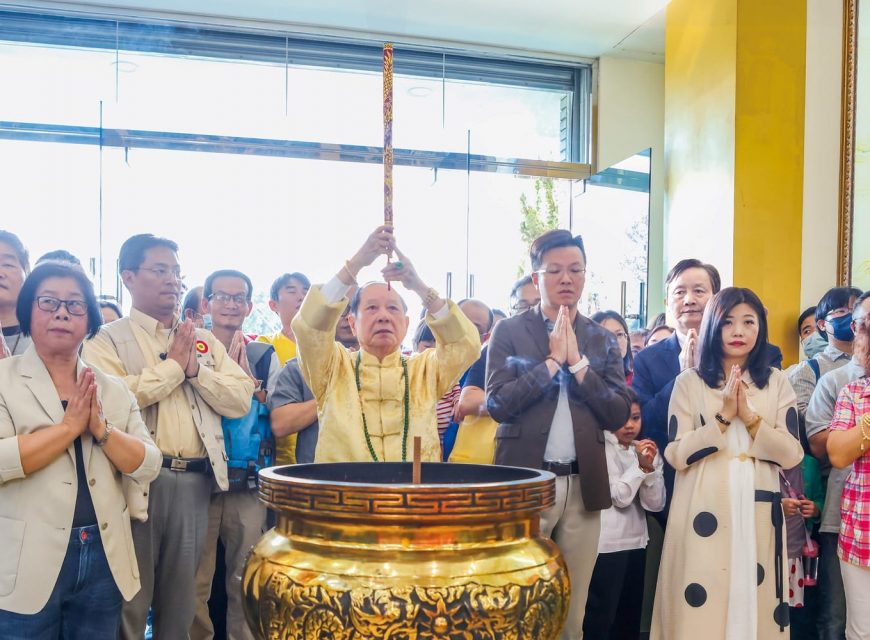
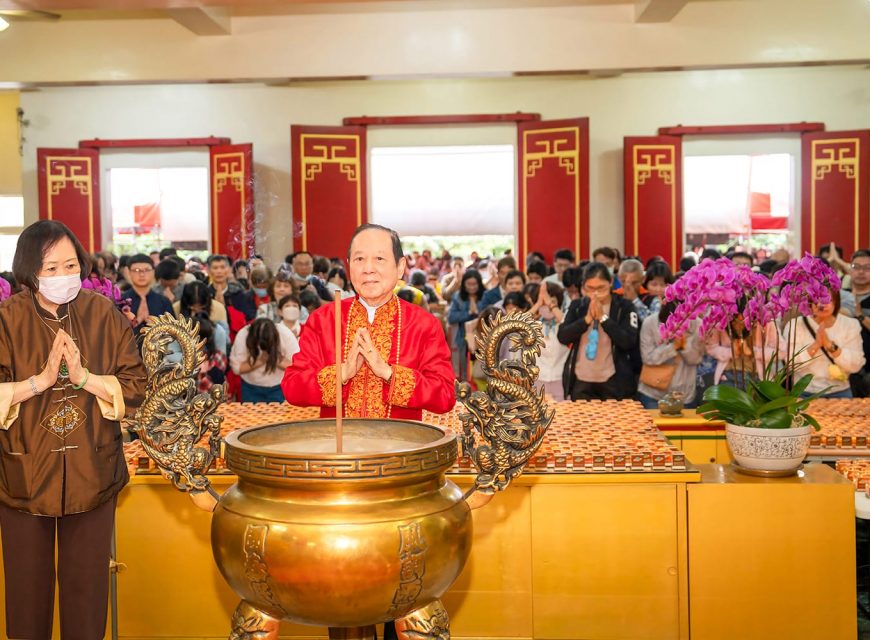
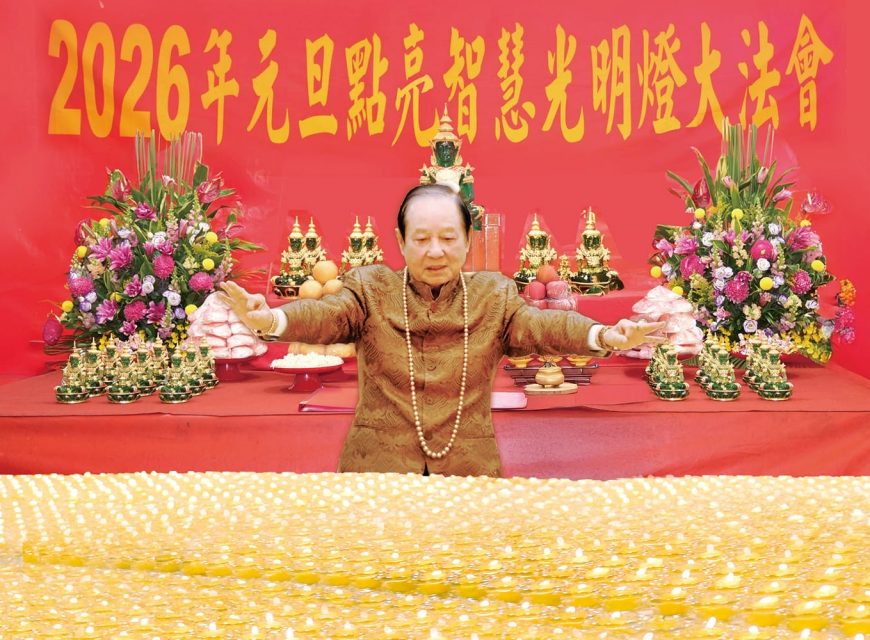
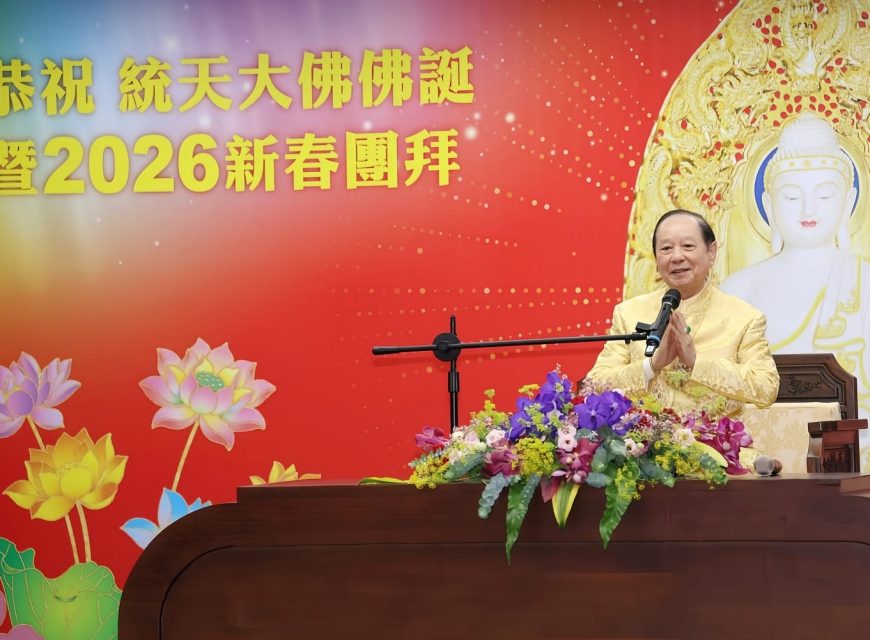
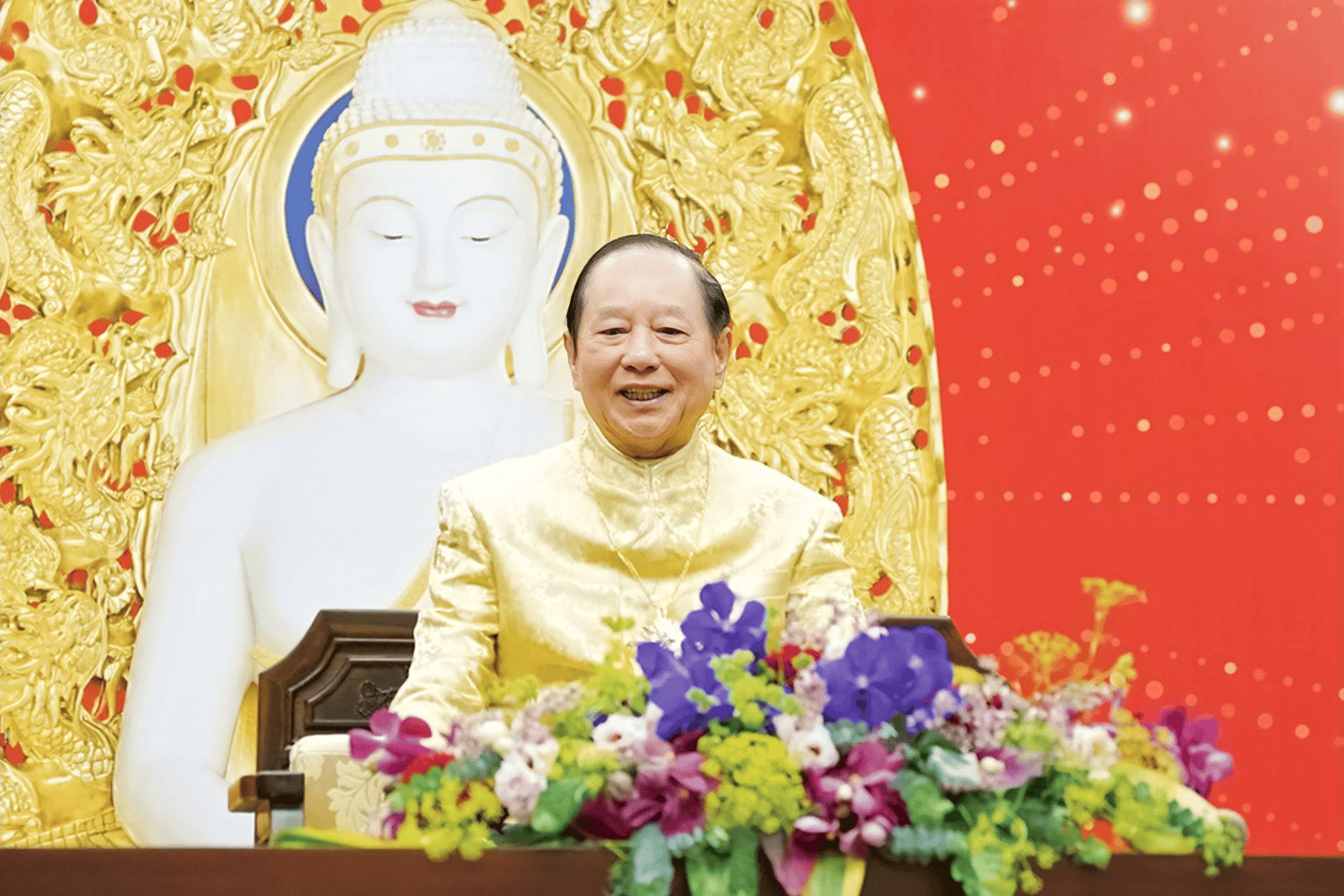
March 3 of this year (2026) marked the joyous occasion of the Lantern Festival, which also coincides with the earthly birthday of the first Buddha of the universe, the “MiaoWu Golden-Body TongTian Great Buddha.” To commemorate this, Buddhaland on Earth International hosted an early celebration on Saturday, February 28. Members of the Buddhaland on Earth Family gathered at the Taipei Nangang Great Zen Hall to celebrate the TongTian Great Buddha’s birthday in advance and hold a Lunar New Year group gathering. Zen Grandmaster Wu Chueh Miao-Tien, the 85th Grandmaster of the Zen Buddhism School and patriarch of the Buddhaland on Earth Family, graced the event in person to share in the joy with everyone.
The event featured a carefully curated program, including a musical storytelling performance about the Sixth Grandmaster of Chinese Buddhist Zen, Grandmaster Huineng, and musical adaptations of Zen Grandmaster Wu Chueh Miao-Tien’s Dharma words, Ode to Attaining Buddhahood in One Lifetime. These wonderful performances left everyone with open hearts and spiritual clarity. For this year’s Lunar New Year gathering, in addition to disciples from northern Taiwan and Buddhaland on Earth Family members convening at the Taipei Nangang Great Zen Hall, disciples from the United States made a special trip to Taiwan just to attend. Meanwhile, Zen centers in central, southern, and eastern Taiwan, along with overseas centers, joined the live broadcast via video link, making the occasion extraordinarily auspicious and sacred.
As this year is the Year of the Horse, the event opened with the dance piece Heavenly Horses Galloping, performed by the Bao Dance Studio under the direction of Teacher Jian Huabao. Accompanied by Teacher Luo Changqin on the erhu, this magnificent performance was deeply moving. Following this, the host led everyone in respectfully reciting a birthday prayer for the TongTian Great Buddha, with all attendees vowing to attain Buddhahood in one lifetime. Next, the disciples offered New Year’s greetings to Grandmaster Miao-Tien, exchanging mutual wishes to “Transcend time and space, and achieve immediate success!”
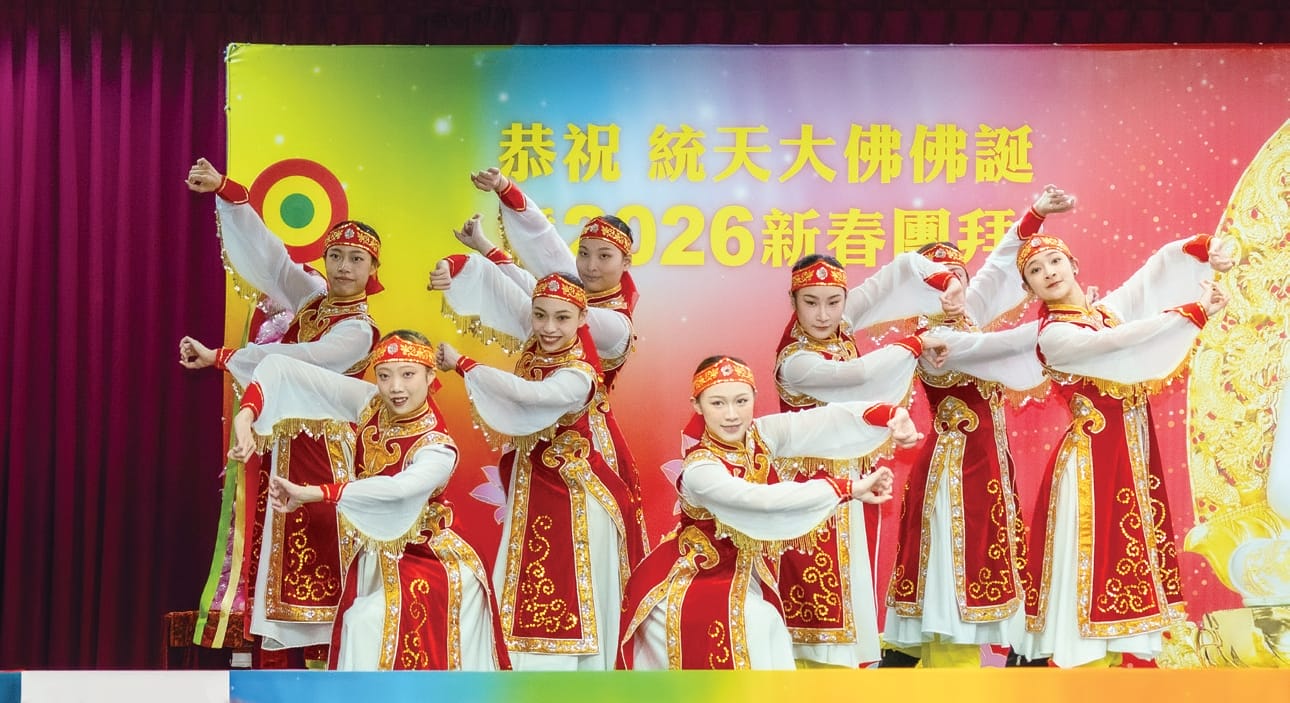
The opening performance: Baowudian, led by Teacher Chien Hua-pao, performing the dance “Heavenly Horses Galloping.
Zen Grandmaster Miao-Tien compassionately blessed the longevity peaches, peace apples, and other items at the venue. Disciple Chueh Miao Tongming, who made a special trip back from the United States, represented fellow American practitioners in presenting Grandmaster Miao-Tien with the newly published English editions of Heart Zen Practice and 10 Chakra Meditation as a Lunar New Year gift. This marks the first English translation of Grandmaster Miao-Tien’s teachings published by the US branch of Buddhaland on Earth International.
Zen Grandmaster Miao-Tien then wished the members of the extended Family a Happy New Year and delivered a Dharma talk to the attendees. The Grandmaster expressed that whether practitioners were present at the venue or joining via the live video stream from central, southern, and eastern Taiwan, or overseas, everyone gathering together symbolized the close, family-like bond of the Buddhaland on Earth Family. The atmosphere was filled with happiness, harmony, and warmth.
The Grandmaster gently reminded everyone that from the moment they begin their spiritual practice, they must first clearly understand why they are practicing Zen. Shifu emphasized that this applies whether they have been practicing for a few months or several years— specifically noting the many new practitioners recently welcomed by the US Zen centers. This foundational concept is incredibly important.
Let us put aside for a moment the idea that the goal of cultivation is to attain Buddhahood—though, in truth, that is exactly its fundamental purpose. Therefore, beginners who have just stepped onto the path must first firmly believe: ‘I am capable of attaining Buddhahood.'”
The Zen Grandmaster cited the “Three-Colored Light” as an example: “All of you have seen the Three-Colored Light I consecrated at the Zen dharma center. If you observe closely, you will discover that there is genuine ‘light’ manifesting from within. It is not merely colors, but an actual golden light—a flowing golden light.”
The Zen Grandmaster expounded that the outermost red light of the Three-Colored Light represents our physical body. That is to say, our bodies should be like this red light, shining across the earth like the sun, providing the vital energy of life to humanity and all sentient beings.
The Zen Grandmaster said, “We must also possess such a heart and embark on the Bodhisattva path, carrying out Dharma practice and the giving of Dharma for all of humanity and sentient beings. We must let more people know that the Heart-Imprint Buddhist Zen we cultivate is the true Dharma. It is not merely a conceptual Dharma, but a Dharma that enables the ‘body, mind, and spirit’ to achieve realization as one unified whole.”
Emptying the Body, Mind, and Heart is True Cultivation
The Zen Grandmaster continued to explain that since we aim for the unified realization of “body, mind, and spirit,” the very first step must begin with the physical body. After initiation, you should be able to see your health improving day by day, year after year.
“Perhaps in a few years, you will notice your classmates and colleagues gradually showing signs of aging, yet you will still appear very young and full of joy. Your complexion will be radiant—this is a light shining forth from within. From this, it is evident that cultivating the Heart-Imprint Zen brings about genuine health.”
How does one attain health? The Zen Grandmaster expounded that, first and foremost, we must achieve “emptiness of the body.” To enter a state of deep meditation in our cultivation, we must practice the “emptiness of body, emptiness of mind, and emptiness of heart.” What is emptiness of the body? It means that our words, actions, and demeanor must all be entirely purified and immaculate. We must not bring trouble upon ourselves; rather, we must distance ourselves from all negative people and situations, staying far away from such defilements.
How do we put this into practice? For example, we should carry a spirit of generosity when practicing giving, wishing for others to become as pure and healthy as we are. At the same time, we must avoid entangling ourselves in material, financial, or emotional complications. Furthermore, we must attend the Zen dharma center to practice the Ten-Chakra Meditation of Heart-Imprint Zen.
The Zen Grandmaster said, “We have ten chakras within our bodies; these are ten centers of life energy. During deep meditation, we focus on them one by one to awaken the life energy within, which is highly beneficial for our health.”
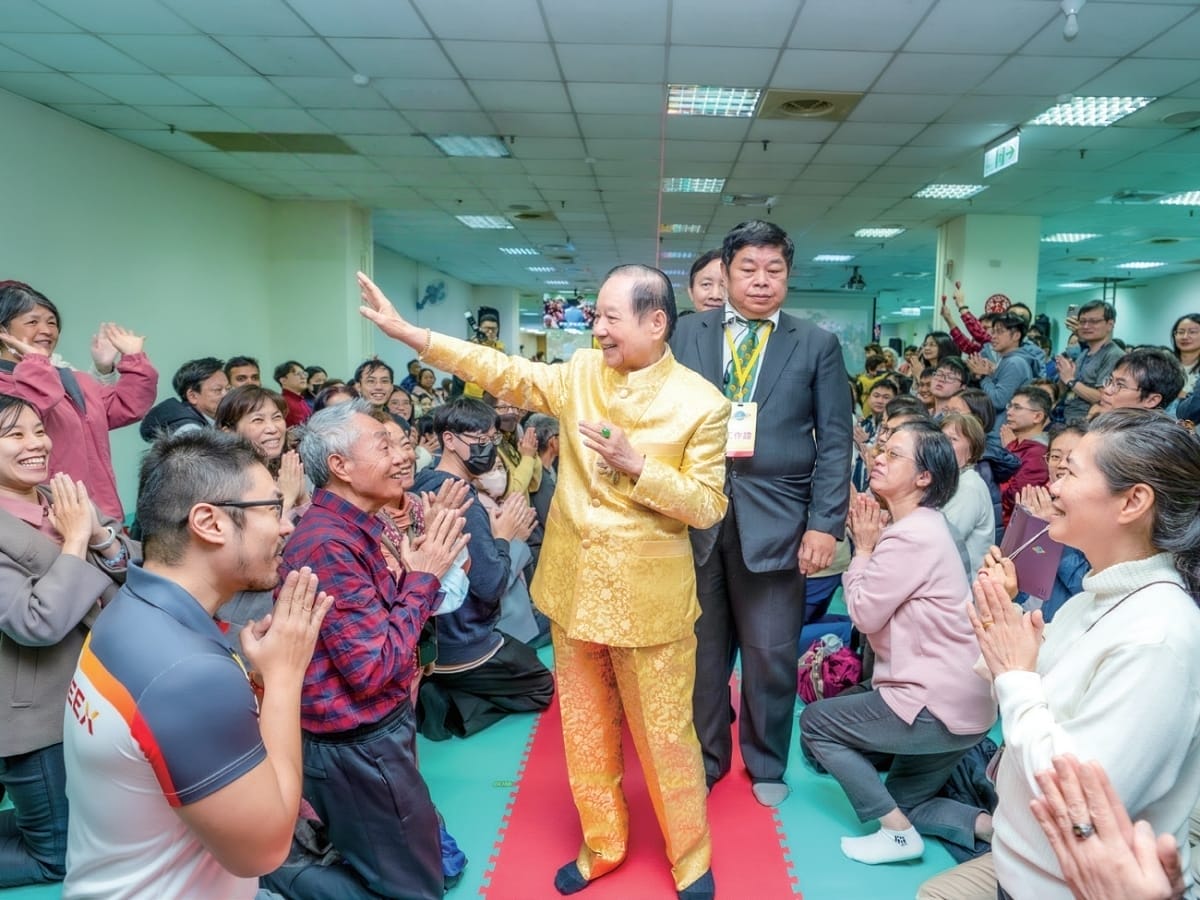
Zen Grandmaster Wu Chueh Miao-Tien, the 85th Grandmaster of the Buddhist Zen School, visiting various venues to bestow blessings upon all attendees.
“These ten chakras are all interconnected. They will activate the nearby organs, tissues, and systems to generate energy in tandem, filling the entire body with vitality. Naturally, one becomes very healthy.”
The Zen Grandmaster said that although we are often busy with our daily lives and work, and not actively engaged in deep meditation, the energy and qi awakened through Zen meditation will continue to circulate within our bodies. Just as the planets in the heavens revolve on their own, our breathing, the beating of our hearts, and other functions will also operate naturally. “Allowing this inner qi to flow smoothly throughout the body is the best way to achieve good health.”
Another method is to maintain a relaxed and cheerful state of heart. “In particular, avoid being emotionally reactive. Some people speak with intense emotion and use harsh words that make others feel uncomfortable. Instead, you should speak with a joyful heart. Not only will you feel happy yourself, but the listener will also feel at ease. This is a very important practice in spiritual cultivation.”
The Zen Grandmaster explained that a person in a good mood not only experiences positive emotions daily─feeling calm, peaceful, joyful, and at ease─but also enjoys better physical health. Furthermore, good things will naturally happen around them.
Zen Grandmaster Miao-Tien specifically reminds us that in addition to maintaining a joyful heart in our daily lives, we should also hold a joyful heart during Zen meditation. This can inspire the organs and cells within our bodies to rejoice as well. “Although we cannot see the joy of our organs and cells, they are all very healthy.”
“I do this every day, so I feel that I will not age. I believe that even if I live to be a hundred, I will be exactly the same as I am now. This is the first benefit of spiritual practice: longevity, eternal youth, and everyday happiness.”
“The greatest sorrow in life is being unable to take care of yourself in your old age and having to rely on others for care. Therefore, we should always pay attention to our physical health in our daily lives. I often say, if you can manage your own body, you can manage your own life.”
The Zen Grandmaster taught that practicing the Heart-Imprint Zen Dharma is the true cultivation for the liberation of the “body, mind, and spirit.” When the day comes that you “enlighten the heart and witness the true nature, and through seeing your true nature attain Buddhahood,” even though the physical body perishes, the spirit can live eternally in the heavenly realm. This is “transforming a finite life into an infinite, eternal life.” It is the greatest benefit of spiritual practice, and something that ordinary people cannot attain.
The Zen Grandmaster then gave a teaching on “Emptiness of Mind”: Those who generally cannot achieve “Emptiness of Mind” are constantly overworking their minds, endlessly letting their thoughts run wild, and continuously wasting their mental energy. Consequently, they age rapidly and are highly susceptible to dementia. So, how should we maintain our brains? By using them when they need to be used, and actively engaging them, because the more you use your brain, the more agile and sharp it becomes. However, using the brain does not mean letting your thoughts wander aimlessly; that is a waste of mental energy, generating nothing but negative energy. It must absolutely be applied to the righteous path, and to your spiritual practice.
How do we elevate our body, mind, and spirit? The Zen Grandmaster taught that we must be able to let go of all chaotic and complicated matters—let go of everything completely, and enter a state of pure emptiness.
The Zen Grandmaster explained, “Beginning with pure emptiness, one enters spiritual wisdom—Prajna wisdom. If you do not achieve pure emptiness, you cannot enter Prajna wisdom. The very purpose of Zen meditation is to enter Prajna wisdom.”
“Prajna wisdom is wisdom from another dimension; it is the wisdom of Buddhas and Bodhisattvas, not worldly wisdom. Therefore, in spiritual practice, one must know how to cultivate ‘Emptiness of Body’ and ‘Emptiness of Mind.'”
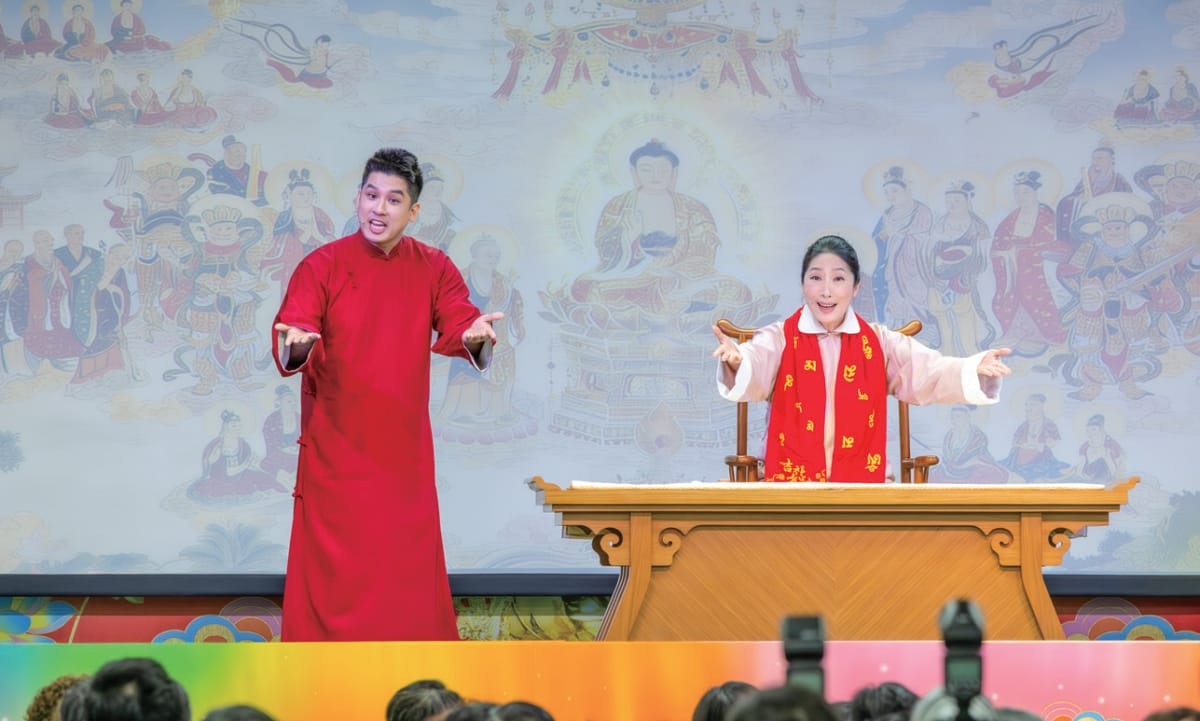
Storyteller Yeh I-chun (right) and the Taipei Quyi Troupe performing the musical pingshu “Grandmaster Huineng, the Sixth Grandmaster of Chinese Buddhist Zen.”
What are the benefits of achieving “Emptiness of Mind”? It can make the brain sharper and more lucid. The Zen Grandmaster once imparted the “Golden Brain” method, which trains the brain to retain its original essence, preventing it from being depleted. In this way, the brain can stay healthy and maintain its youthfulness.
The Zen Grandmaster emphasized that after achieving “Emptiness of Mind,” it must be transformed into wisdom. In addition to training our brainpower and intellect, we also need to know how to protect the brain.
Next, the Zen Grandmaster taught on “Emptiness of Heart”: To achieve “Emptiness of Heart,” one must first attain the purification of the Eight Consciousnesses. Because our five sensory organs—”eyes, ears, nose, tongue, and body”—interact with the external world every day, whether what they encounter is good or bad, it will all pass through the conscious mind (the sixth consciousness) to generate good or bad thoughts. Good thoughts form positive energy, while bad thoughts form negative energy, which in turn affects the heart.
“The seventh consciousness is the subconscious mind within the heart, and the eighth consciousness is the Alaya consciousness, which is the heart itself. From our external ‘five sensory organs’ to the ‘sixth consciousness,’ the entirety of our consciousness ultimately reaches the heart. Therefore, the heart is incredibly important; we must cleanse and purify it from the inside out.”
“So, how do we do this? It is actually very simple: just maintain a joyful and serene heart every day. By doing so, you can dissolve all that is bad and negative, and it will naturally attain emptiness.”
“Spiritual practice is the cultivation of the heart. You must let go of all that is negative, enter a state of pure heart from within, and then enter into Prajna wisdom. Spiritual practice is the cultivation of ‘purity, prajna, perfection, and perfect enlightenment’.”
The Zen Grandmaster emphasized that all spiritual practice begins with purity, and the very first step is to achieve it. “Spiritual practice progresses from being a ‘human,’ through the stages of ‘Arhat’ and ‘Bodhisattva,’ up to the highest state of ‘Buddha.’ Across all these many levels, one must always begin with purity, and then progress toward prajna—layer upon layer of prajna.”
Many people often ask: “Why should we engage in spiritual practice?” The Zen Grandmaster explained, “Because spiritual practice can change a person’s destiny, improve their health, and make their family highly harmonious and prosperous. Therefore, it goes beyond the traditional saying, ‘a harmonious family prospers in all things’; it elevates to ‘a thriving family succeeds in all things.’ If everyone can achieve this, then society, the nation, and even all of humanity and sentient beings across the globe will attain peace and tranquility. The world will be truly peaceful without war, and the Earth will become a Buddhaland, a heaven on earth. This is our ideal, and this is the goal we strive to achieve.”
A Thriving Family Brings Success in All Things; The Earth Becomes a Buddhaland
“This is why we have established numerous Zen practice centers in various places—to let more people know about the many benefits of practicing Heart-Imprint Buddhist Zen. It elevates every aspect of your being, including your physical health, your life force, and even your spiritual merit. There is no need to travel everywhere to worship and pray to the Buddha. Coming directly to practice Heart-Imprint Buddhist Zen and helping yourself is truly the most reliable path.”
After the Zen Grandmaster concluded his Dharma talk, Yeh I-chun—a pioneer of female xiangsheng (crosstalk) in Taiwan and director of the Taipei Quyi Troupe—took the stage alongside three musicians: Chang Shih-neng, Huang Chien-kai, and Chiang Shu-ting. Together, they delivered a musical pingshu (traditional storytelling) performance titled Grandmaster Huineng, the Sixth Grandmaster of Chinese Buddhist Zen. The moment Yeh stepped up and struck her xingmu (storyteller’s wooden block), she instantly captivated the audience. With her dynamic vocal cadence and animated expressions, she wove the Sixth Grandmaster’s story together flawlessly, effortlessly switching back and forth between the roles of the narrator and Grandmaster Huineng. Her performance was not only mesmerizing but also deeply resonant. A particularly engrossing moment was when she recounted Governor Wei asking the Sixth Grandmaster about the Dharma: “If one recites the name of Amitabha Buddha and vows to be reborn in the Western Pure Land of Ultimate Bliss, can they truly achieve this?” Grandmaster Huineng replied, “Shakyamuni Buddha taught that the Western Pure Land is not far away. The distance of ‘one hundred and eight thousand’ does not refer to a physical distance of 108,000 li, but rather to the elimination of the Ten Evils and the Eight Deviations within oneself.” The delivery of this profound teaching was completely spellbinding.
The third performance featured five professor-level vocalists—Li Jung-ying, Chen Hui-ju, Hsiao Han, Hsiao Cheng-jui, and Chang Chun-han—singing “Ode to Attaining Buddhahood in One Lifetime.” This piece, based on the Dharma words of Zen Grandmaster Wu Chueh Miao-Tien, was composed by the talented musician Ho Chen-chen and accompanied by a dance from Bao Dance Studio. The five vocalists delivered a deeply emotional performance; their voices soared to the heavens, sounding truly angelic. Meanwhile, the dancers of Bao Dance Studio, holding lotus flowers in their hands, moved gracefully into the audience with elegant steps, making everyone feel as though they had been transported to a heavenly realm.
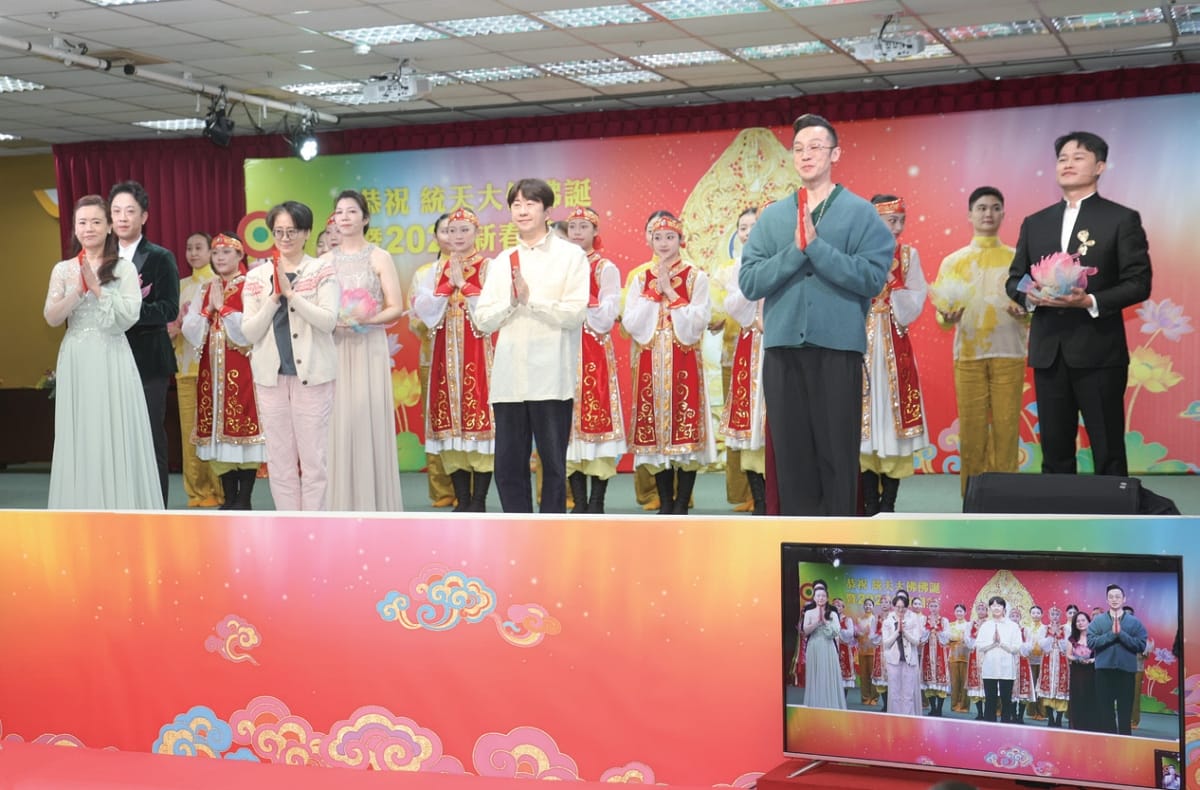
Baowudian and five vocalists performing “Ode to Attaining Buddhahood in One Lifetime,” composed by Ho Chen-chen based on the Dharma words of Zen Grandmaster Miao-Tien.
The lyrics of Zen Grandmaster Wu Chueh Miao-Tien’s Dharma words were especially striking. Every word was a profound gem that resonated directly with the soul:
“Sentient beings are blinded by ignorance, Driven by desires into endless rebirths. Arising and ceasing, life after life, The wheel of samsara turns without end.
To break this cycle, wisdom must shatter ignorance. Zen meditation gives rise to wisdom, And the True Dharma imprints upon the heart.
To attain the True Dharma, first seek an enlightened master; Having met the master, offer a true and undivided heart.
The master’s wondrous Dharma purifies all karma, Transforms consciousness into prajna, and completely remakes the soul.
The Supreme Dharma cannot be merely studied or chanted; That is like climbing a tree to catch a fish—a futile endeavor.
The Buddha Jewel, the Dharma Jewel, all Buddhas and the Mother of Buddhas; With the enlightened master’s guidance, awaken in this very moment.
Awakened to the Dharma, everyone is perfect, Every matter is perfect, every object is perfect, every phenomenon is perfect.
Perfect wisdom realizes the emptiness of essence, Wondrous wisdom manifests its divine function, Attaining Buddhahood in one lifetime.”
Many in the audience were so spiritually moved that they were brought to tears.
The event concluded with a lucky draw sponsored by Zen Cosmos. Thanks to the enthusiastic wave of sponsorships, the prizes were highly attractive, and everyone eagerly hoped to win. The grand prize—a pair of diamond watches generously provided by Zen Grandmaster Wu Chueh Miao-Tien—was drawn by the Zen Grandmaster himself, bringing the event to its ultimate climax.
The group gathering concluded successfully around noon. Afterward, Zen Grandmaster Miao-Tien personally visited the various venues to bestow his blessings upon all the attendees. In the family area, in particular, the Zen Grandmaster offered special blessings and empowerments to the children, creating a wonderfully warm and peaceful atmosphere.
English Translation: Chueh Miao Dao-Lian and Chueh Miao Gong-Ming