
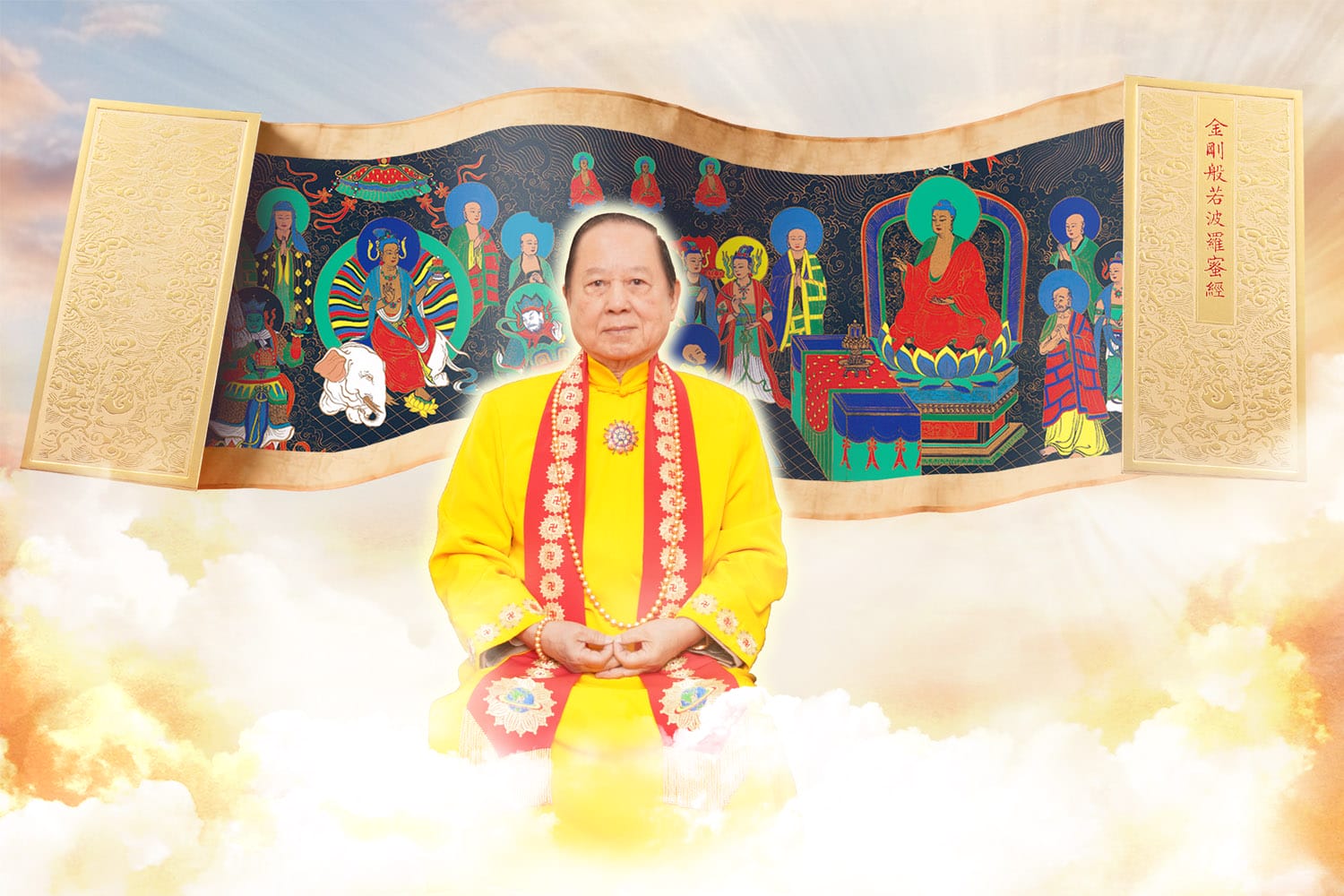
Question: Is Zen meditation necessary in Buddhist cultivation?
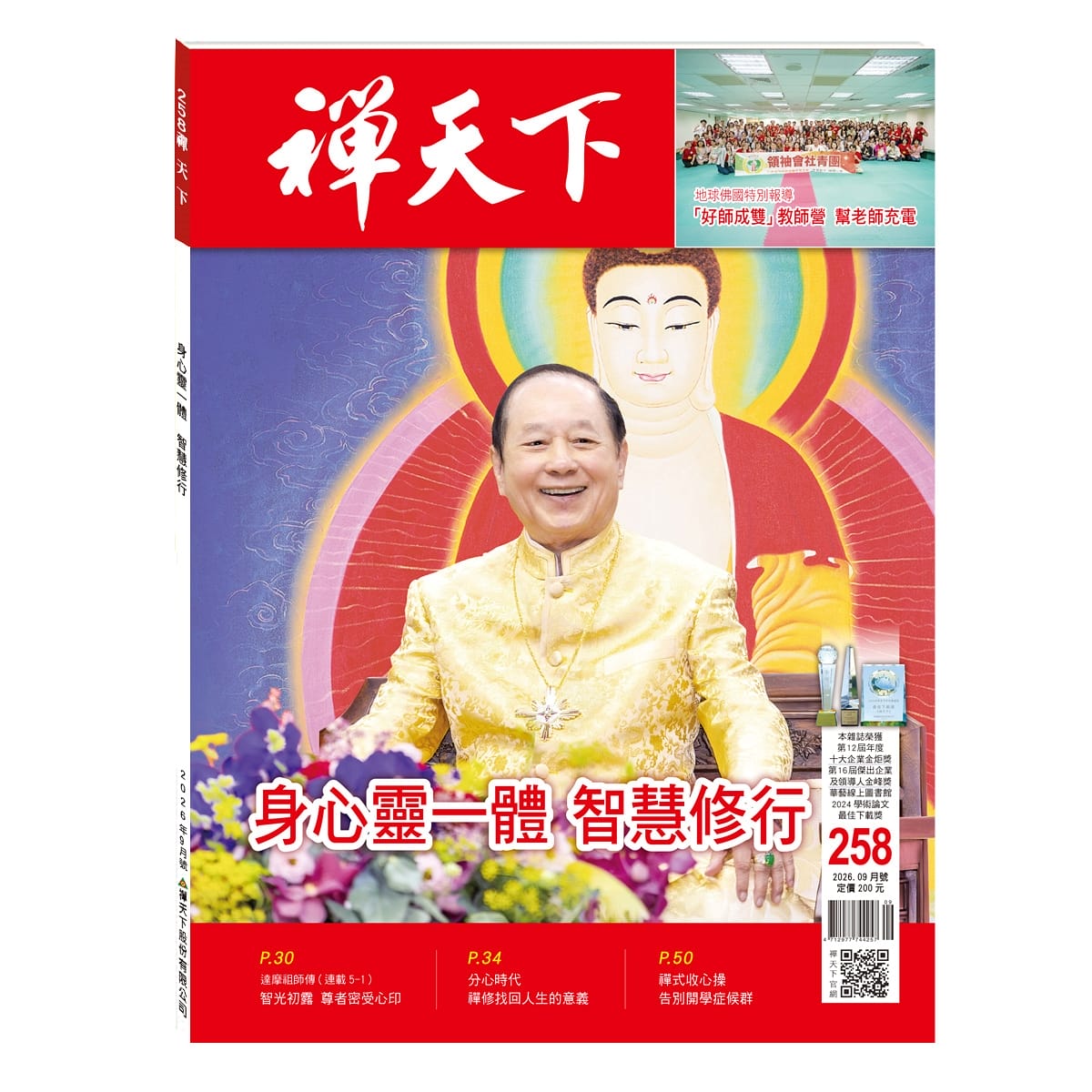
Grandmaster Wu Chueh Miao-Tien, the 85th Zen Grandmaster of the Zen School
What exactly is Zen? Zen is commonly understood as contemplation or meditation, but this only describes the meditative state and does not fully capture the highest realm of Zen.
In the universe, there exists the greatest form of life—some call it Buddha, others call it God. My perspective is that this ultimate cosmic creator of the universe is God, and also Buddha, and that corresponding realm is Zen itself. Therefore, Zen is Buddha, and Buddha is Zen.
The Heart-Imprint Buddhist Dharma transmits the Buddha’s prajna wisdom which encompasses the Buddha’s teachings on precepts, meditation, wisdom, and liberation. The practice begins with upholding precepts, then practicing Zen meditation, followed by cultivating prajna wisdom, which leads to liberation and transcendence, eventually returning to the Buddha’s pure land.
Thus, Buddhist cultivation should follow the path mentioned above. It is not merely about chanting the Buddha’s name or reading sutras. The Buddha said, “Those who see me in form, or seek me through sound, are on a mistaken path and do not see the Tathagata.”
Among the three teaching in Buddhism—precepts, meditation, and wisdom—the greatest emphasis is placed on precepts. Although there are many precepts, I focus on practicing the Ten Precepts: “greed, anger, ignorance, arrogance, doubt,” and “killing, stealing, sexual misconduct, lying, drinking.” These are the fundamental Dharmas of Buddhism. Without upholding them, all practice is in vain.
Eliminating greed, anger, ignorance, arrogance, and doubt is the inner cultivation, while “no killing, no stealing, no sexual misconduct, no lying, and no drinking” are external precepts to uphold. True practice requires cultivating both internally and externally. Regarding “drinking,” I mean excessive drinking. Moderate drinking in social event is acceptable.
Heart-Imprint Buddhist Dharma is the doctrine enlightened by the Buddha, including the Noble Eightfold Path, the Twelve Links of Dependent Origination, the Six Paramitas, and the Ten Grounds of the Bodhisattva. We must cultivate according to Buddha’s teachings on Heart-Imprint Buddhism to attain Buddhahood.
The Heart-Imprint Zen Dharma is the testimony of ShiFu (Grandmaster Wu Chueh Miao-Tien), discovered after accomplishment of Buddhahood. Although the Buddha taught us the Buddhist Dharma, the path is filled with obstacles that must be overcome through Zen meditation. However, the Buddha did not elaborate extensively on Zen meditation, only emphasizing that “the dhyāna paramita is very important.”
In my practice, I realize that the ten dharma realms exist within the body, not outside. I also understand that which dharma realm we inhabit in this life depends on our body, mind, and spirit. So how do we break through these layered barriers one by one through Zen meditation? I found that there are ten chakras within the body, each serving as a passage from the physical form to the dharma realm, allowing direct access to the pure land. With this insight, it becomes clear how important it is to practice Zen meditation to liberate the body, mind, and spirit.
Cultivation follows a definite method, it is not simply about reading sutras. The purpose of reading sutras is to understand the truth, then make the mind resonate with the sutras and coordinate with the body to act and realize it. This is down-to-earth true practice and realization. Moreover, Zen meditation is essential to truly witness the realms preached by the Buddha.
These realms cannot be comprehended merely through intellectual reasoning. Only by entering certain meditative states and then returning to study the sutras can one genuinely grasp the Buddha’s intended meaning. Therefore, cultivation cannot be accomplished without practicing Zen meditation.
English translator: Chueh Miao Gong-Ming and Chueh Miao Dao-Lian